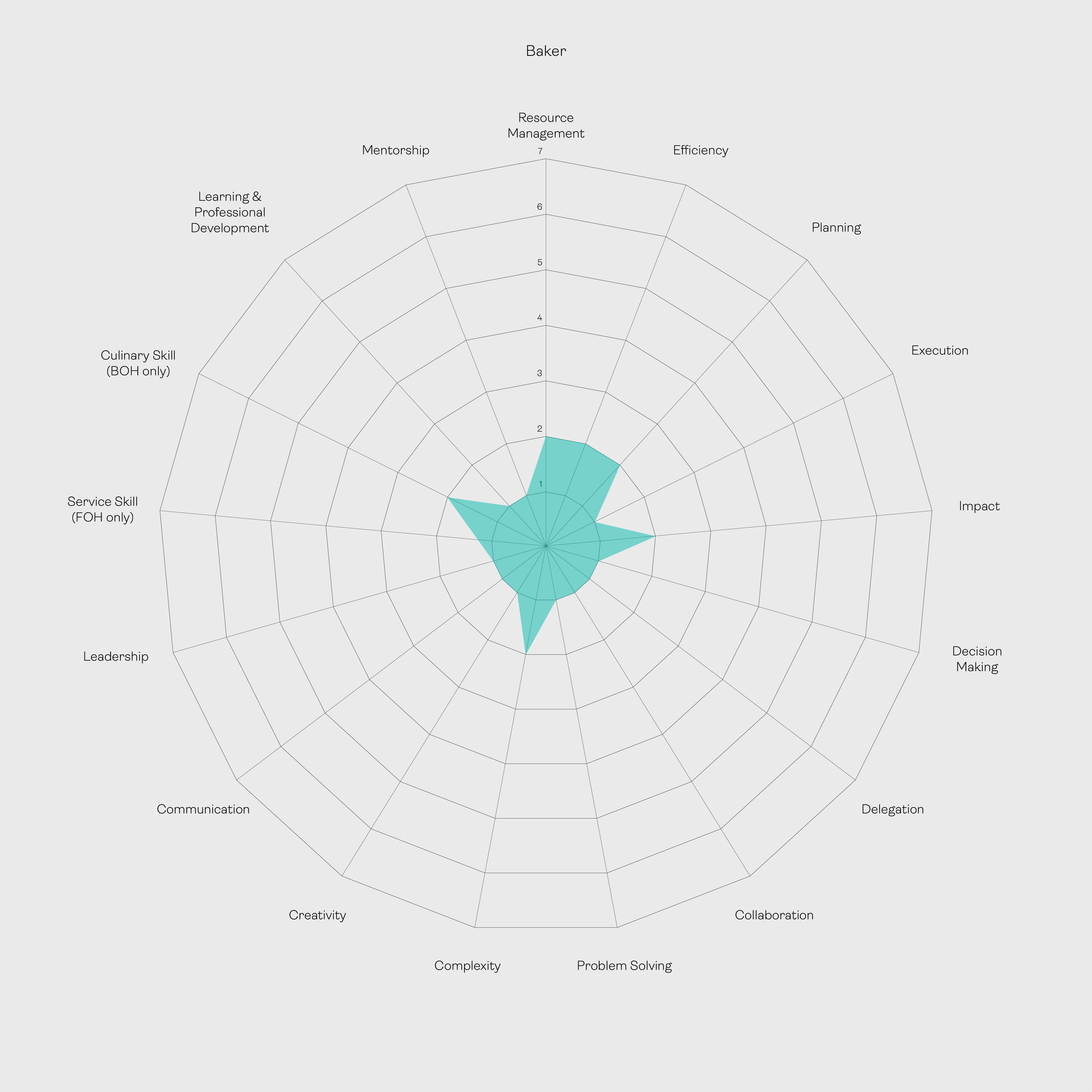
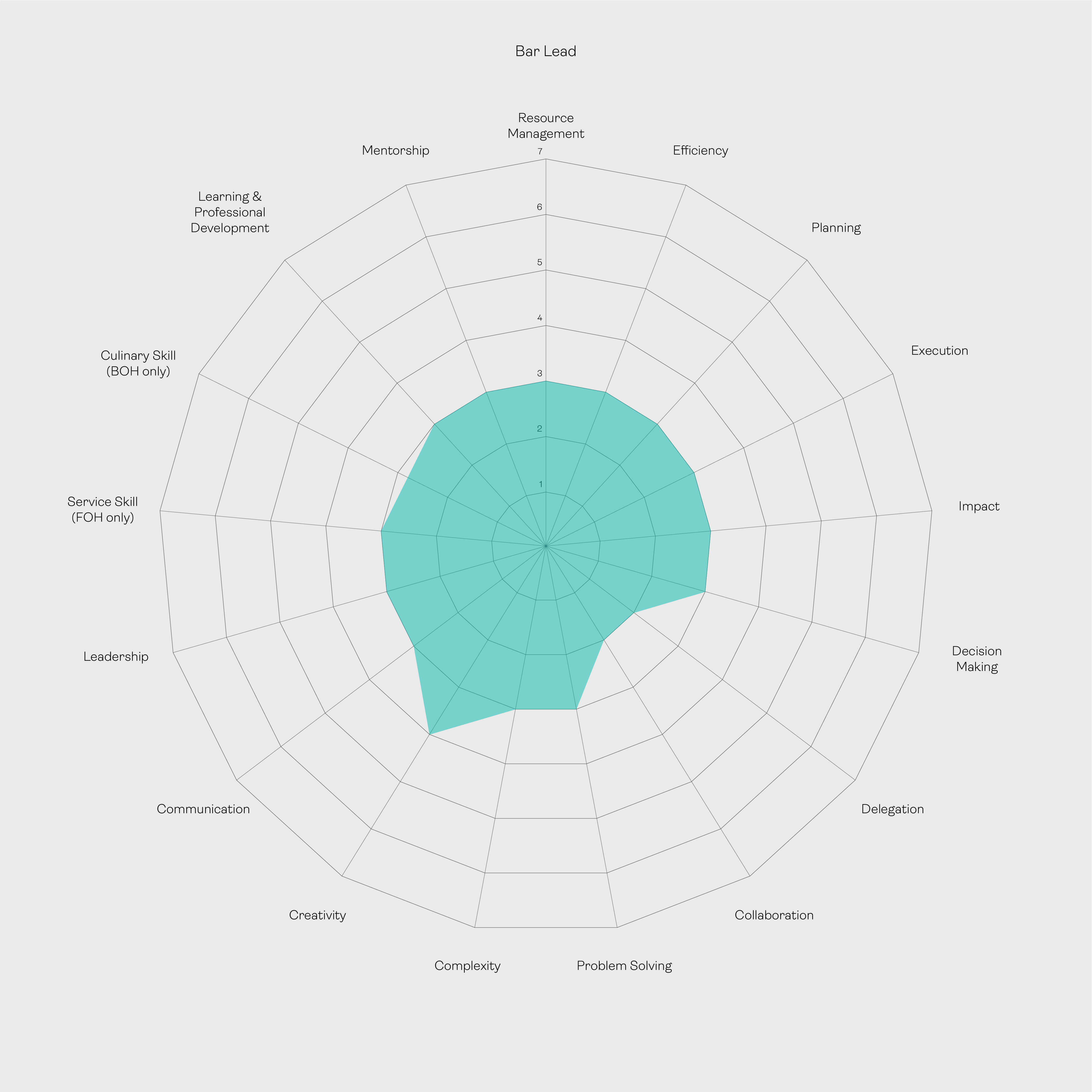
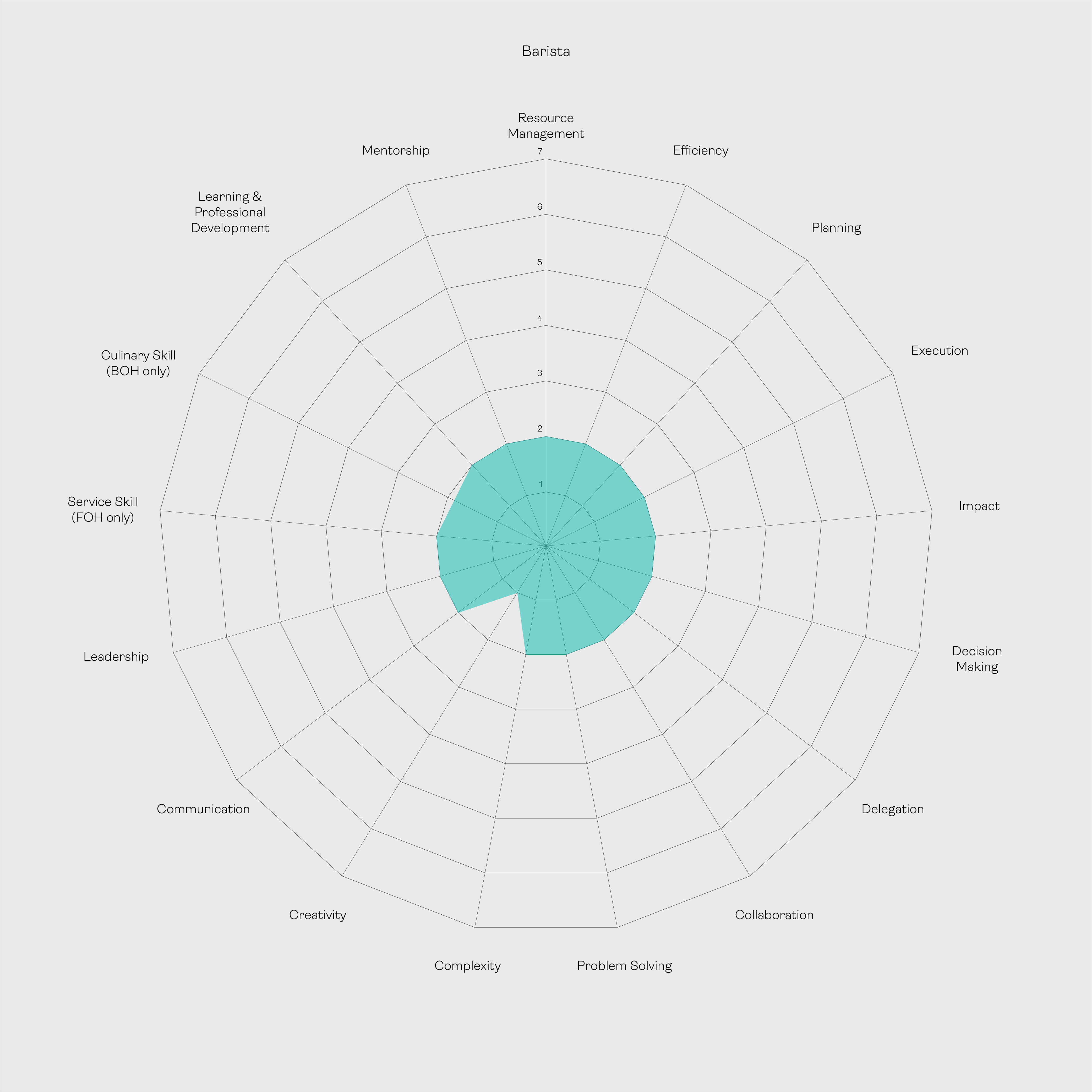
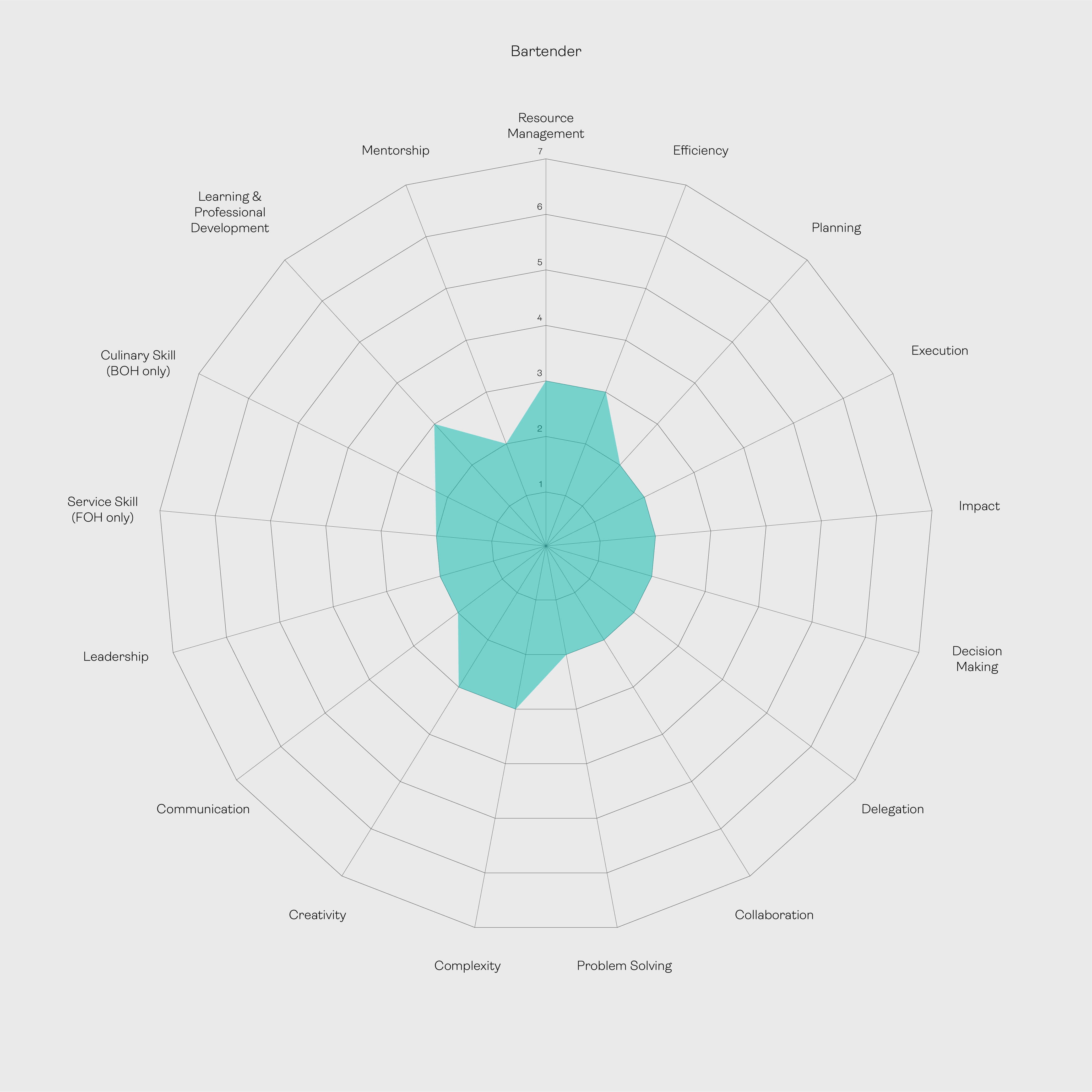
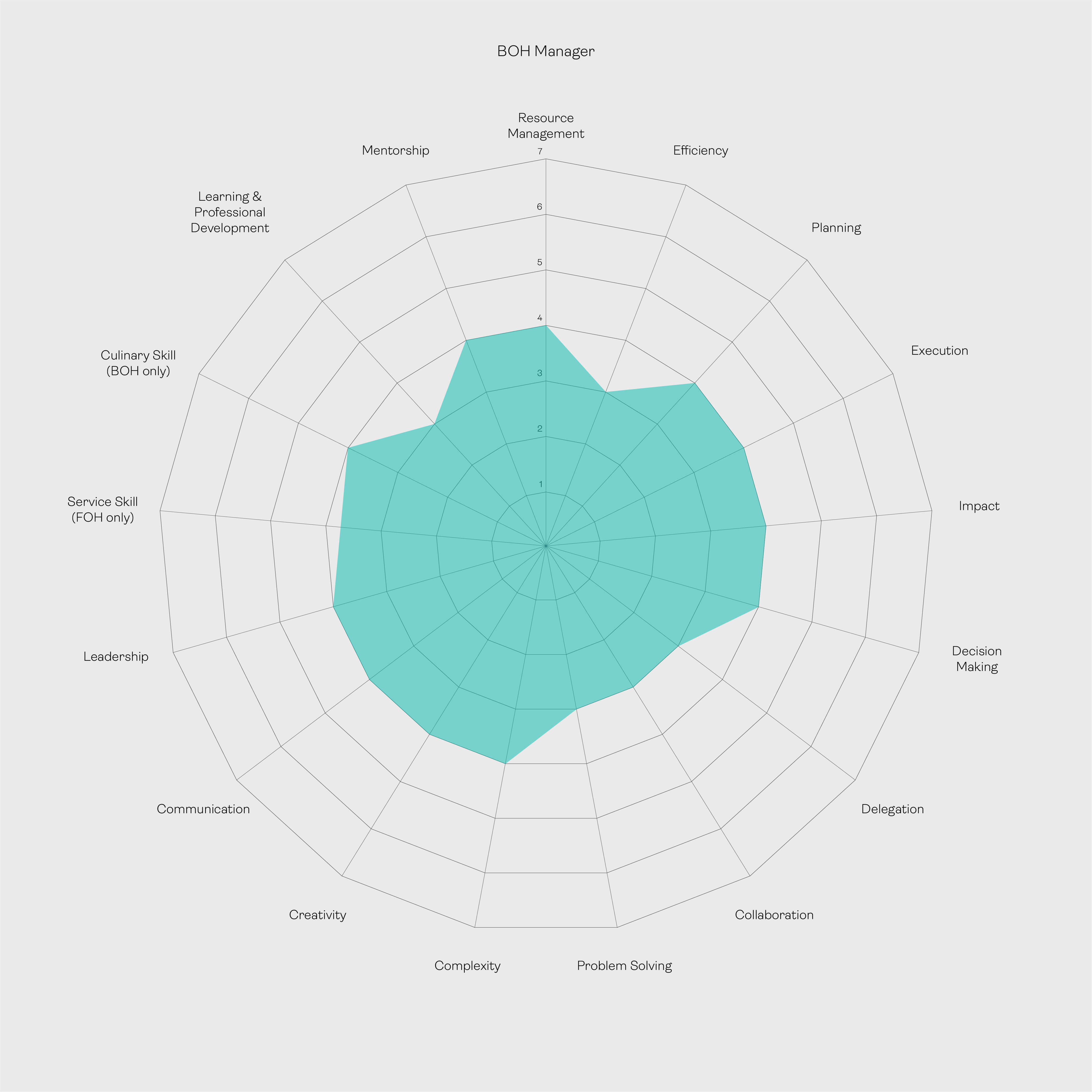
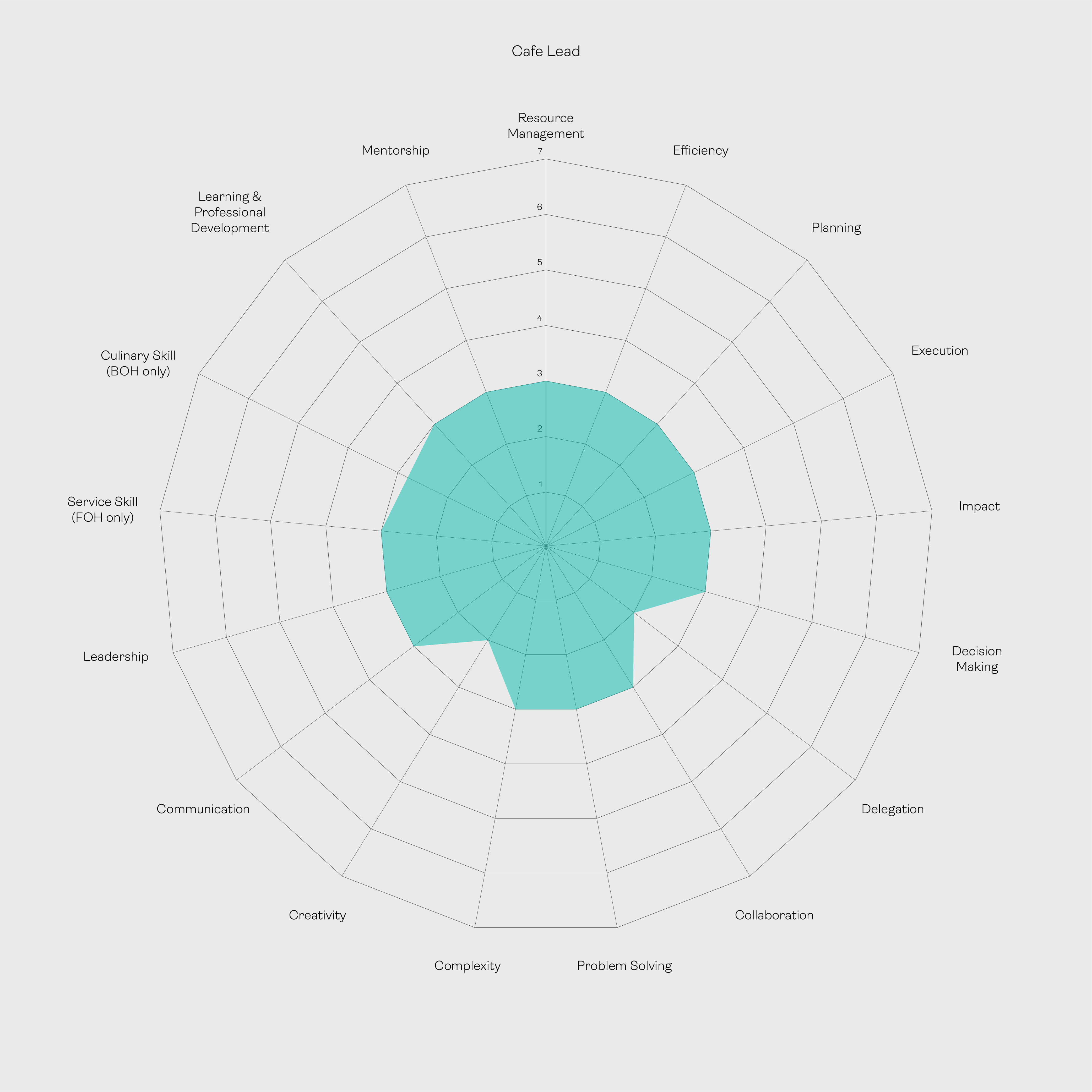
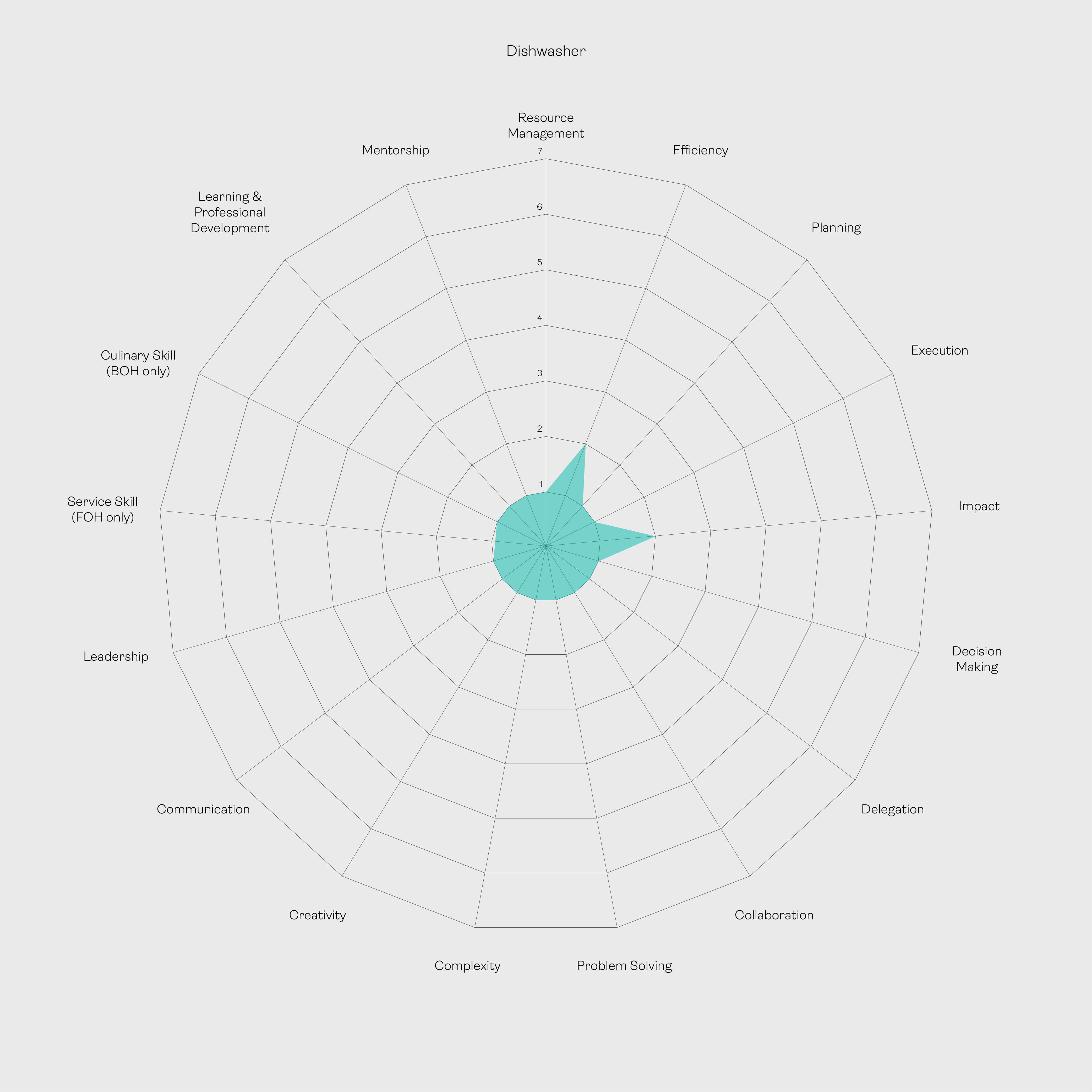
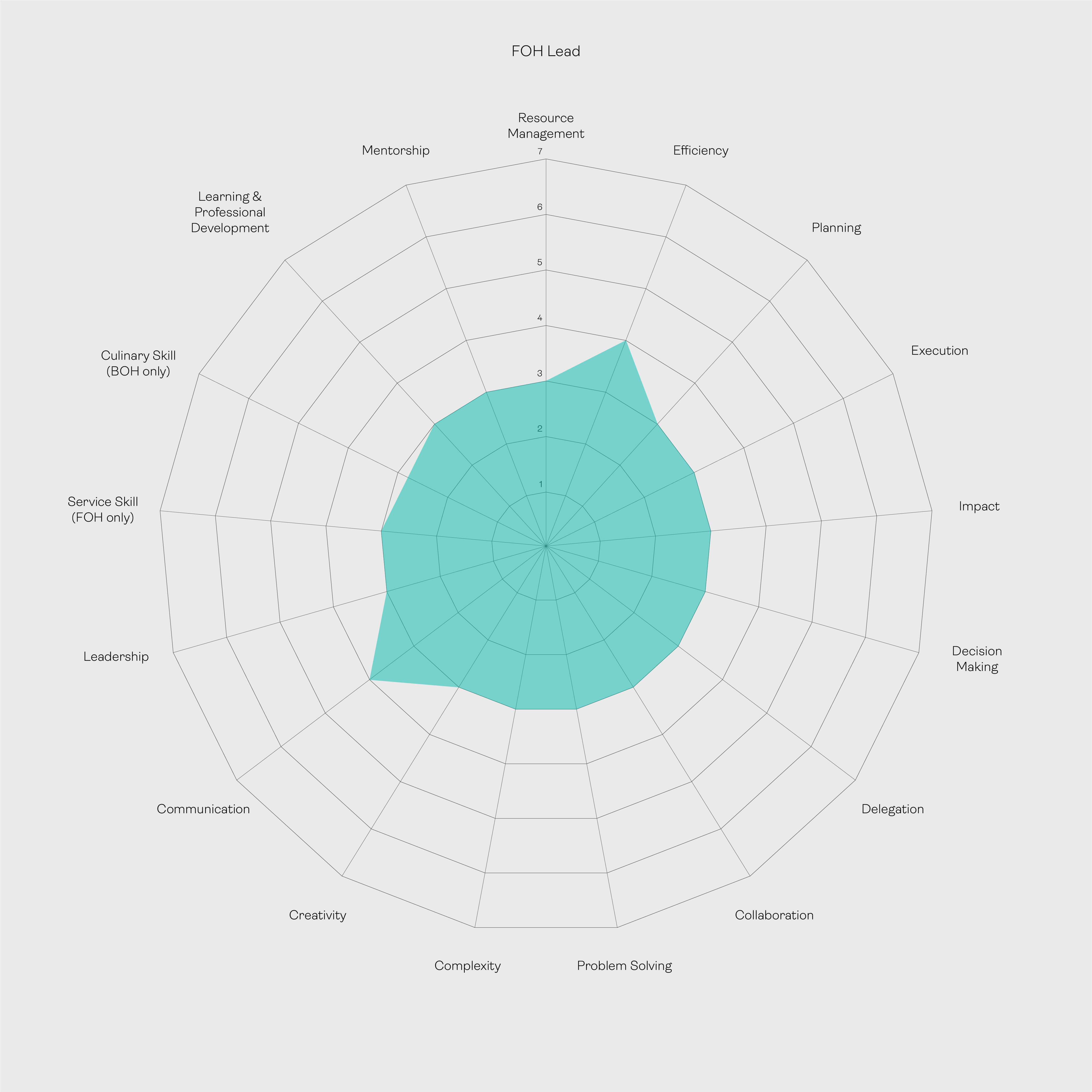
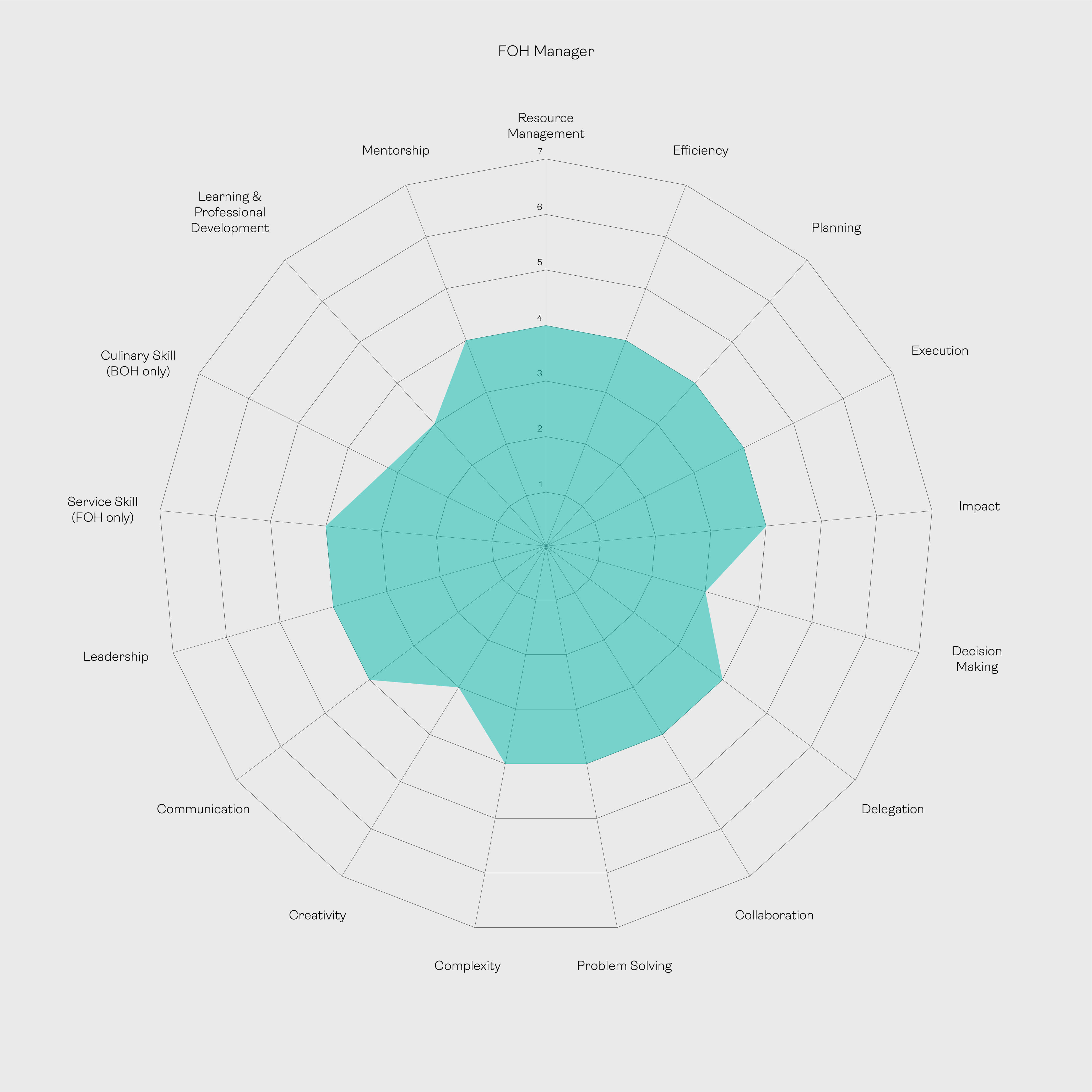
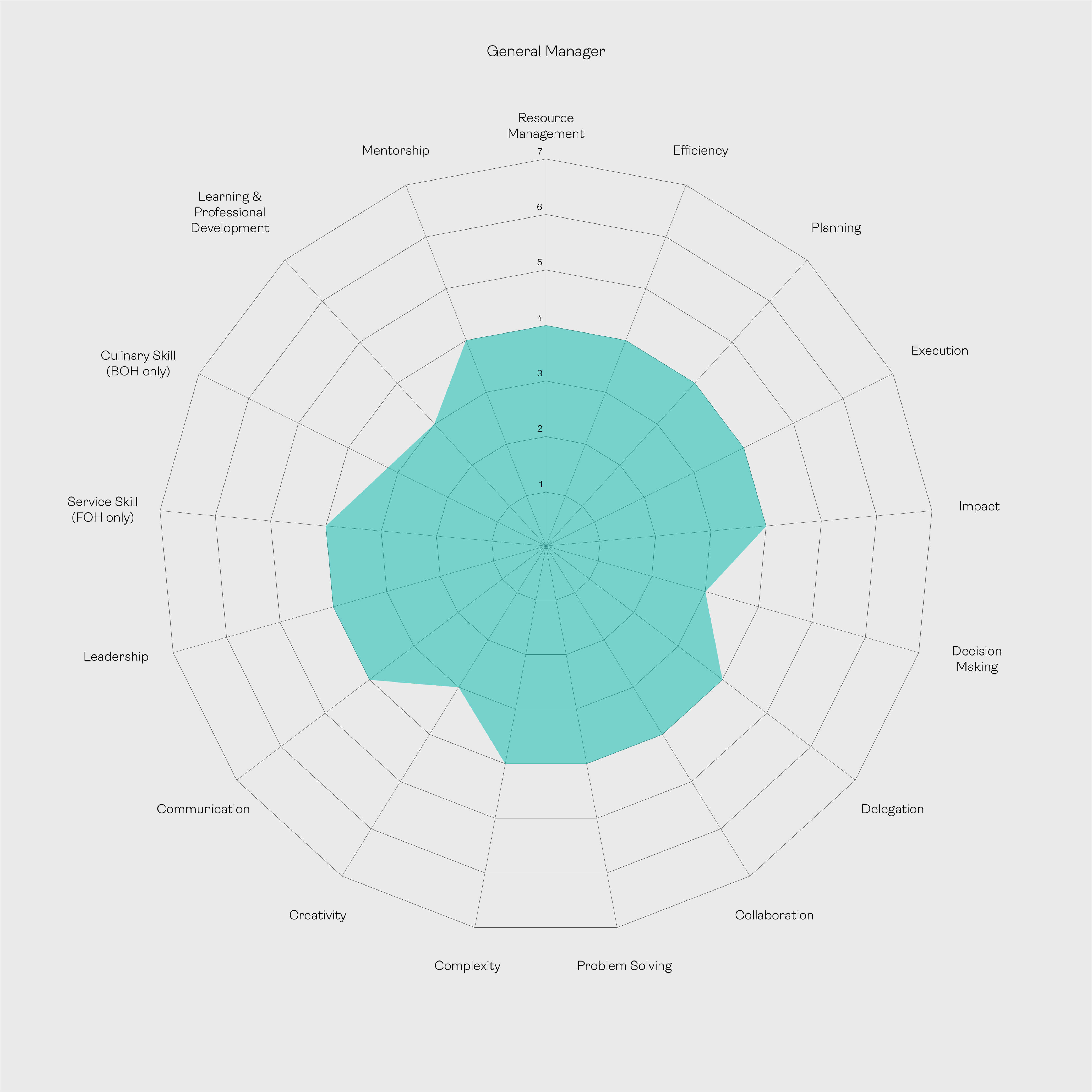
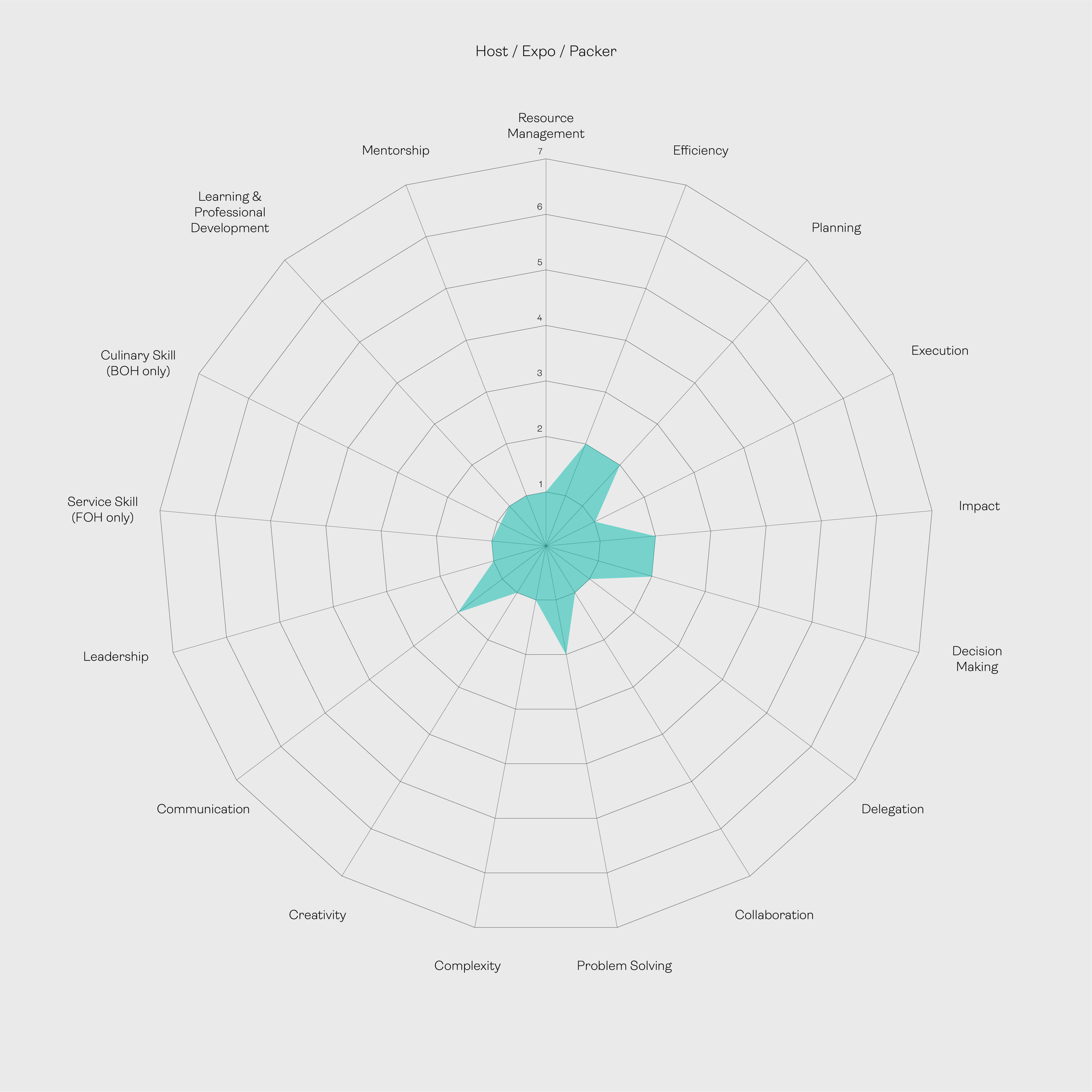
The framework provides us with standardized behaviours and skills we seek in our team members. Managers at all locations will reference SFEA when completing performance management cycles. Our locations are still able to customize how their performance cycle looks with it’s frequency, scheduling, direction (upward, downward, peer, self, 360, etc.), and the delegation of the one-on-ones to the supervisory team.
In addition to SFEA scoring, individual performance evaluations are based on qualitative and quantitative (K.P.I.’s) feedback given from our managers. Brand Directors may also work with Managers to include any other department-specific feedback areas.
In this way all employees receive comprehensive feedback and can visualize areas for personal development creating a feedback-culture in the team.
By identifying 7-levels of authority and assigning each role competency minimums, we can better understand what is expected us and how we can develop ourselves. . In using this framework, we can create better job descriptions, training, career-pathing, and performance criteria surrounding an employees major responsibilities.
Ever think that your team is missing someone or missing training to help it succeed? After a performance cycle our managers can identify skills gaps in not only individuals, but in teams, departments, or in the company as a whole. We can then look at these “missing areas” and either hire-for-it, train-for-it, restructure-for-it, or promote-for-it.
It is difficult at times to promote effectively when it is based on necessity or lack of options. By having standardized competency expectations for each role our potential leaders can better understand what they need to get promoted. Eventually, our skills gap analysis’ will inform what ‘learning paths’ we need to create to allow our team members to be promoted effectively. In this way our newly promoted team members will be better situated to perform in a way the business and our guests need them to.
Allocation of responsibility will help us create an organizational structure that facilitates decision-making. SFEA helps us identify at what level our managers become responsible for certain outcomes.
With added responsibility and performance successes comes fair compensation. SFEA, when used for evaluations and role-mapping, will aid in the wage-adjustment process when we have fair salary ranges created for each role.